
Astrology Aesthetic vs Reality: Why Your Birth Chart Is More Than a "Vibe"
The Rise of Astrology as an Aesthetic
Astrology has never been more visible or more visually appealing.
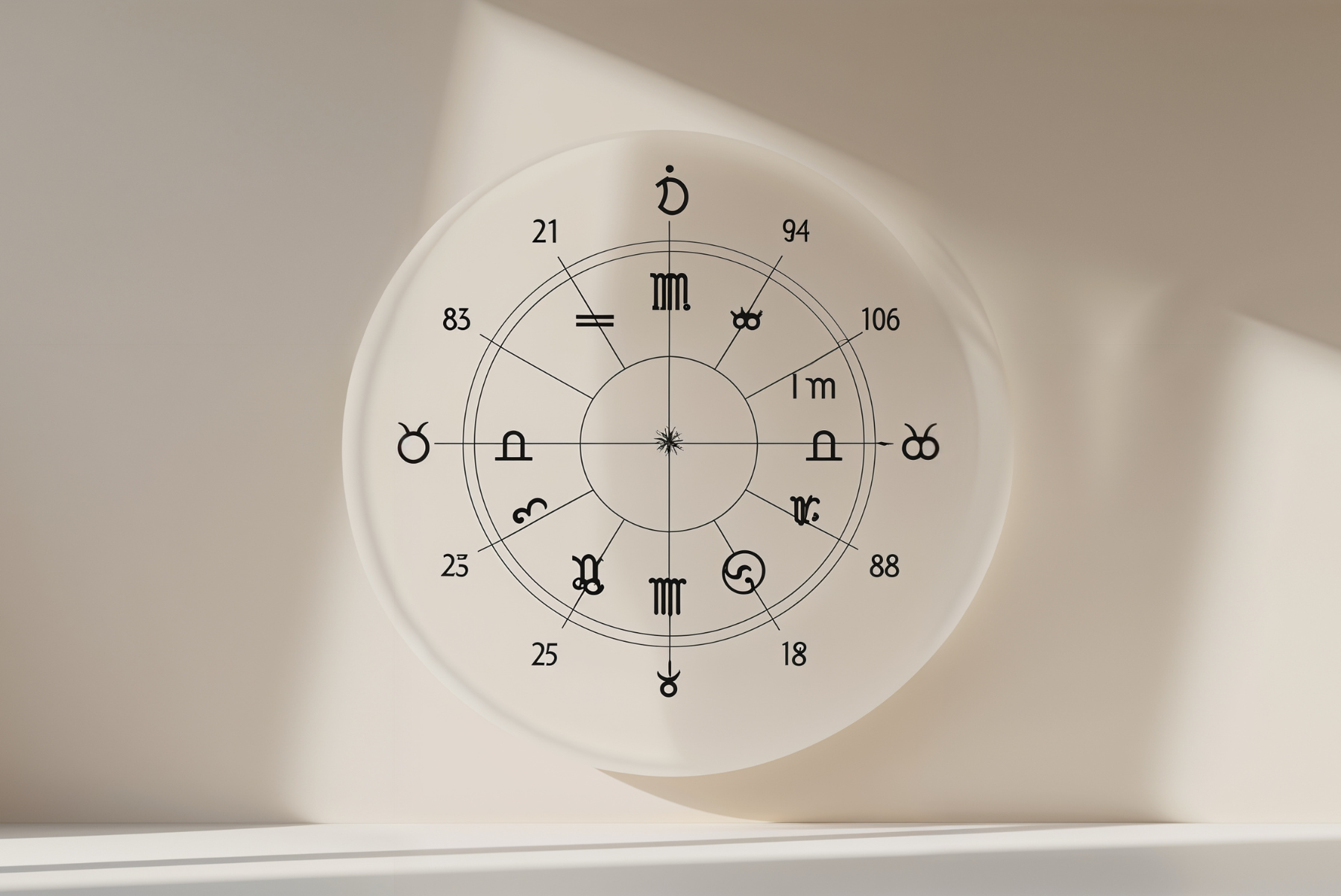
Scroll through any platform long enough, and you’ll find it: beautifully rendered birth charts, minimalist zodiac graphics, soft-toned mood boards labeled with signs and placements. There’s an entire visual language built around astrology now, one that feels curated, intentional, and immediately recognizable.
This is what draws people in.
The aesthetic of astrology makes it feel intuitive. Accessible. Personal. It offers a kind of instant resonance: this looks like me, this feels right, this explains something.
And to a certain extent, it does.
But only on the surface.
Because while astrology has become easier to look at, it hasn’t necessarily become easier to understand.
When a “Vibe” Replaces Understanding
There’s a subtle shift that happens when astrology is consumed primarily through aesthetics.
It moves from something interpretive to something identificatory.
Instead of asking, “What does this mean?”, people begin asking, “Does this feel like me?”
That distinction matters.
Because a vibe can affirm your identity, but it can’t explain your behavior.
You might resonate with the idea of being a “Venus in Libra type,” or feel aligned with a certain zodiac aesthetic, but that resonance doesn’t tell you how your relationships actually function. It doesn’t explain your patterns, your decisions, or the moments where things don’t go the way you expected.
An aesthetic gives you recognition.
It does not give you comprehension.
The Problem With Curated Astrology
The more polished astrology becomes, the more it risks flattening complexity into something digestible — but incomplete.
Placements get reduced to personality traits. Signs become archetypes without context. Entire charts are distilled into a handful of keywords designed to be quickly understood and easily shared.
And while there’s nothing inherently wrong with simplification, there is a limit to how much you can reduce a system before it stops functioning as a system.
Astrology was never meant to be consumed in fragments.
It was meant to be read.
Interpreted.
Applied.
When you engage with it purely as an aesthetic, you’re interacting with a version of astrology that has been stripped of its structure — the very thing that gives it meaning.
Why Your Birth Chart Still Feels Confusing
If you’ve ever felt like your chart should make sense by now, but doesn’t, this is likely why.
You’ve been exposed to astrology in a way that emphasizes recognition over interpretation.
You know what certain placements are supposed to mean. You’ve seen the graphics, read the captions, maybe even saved posts that felt accurate in the moment.
But when you sit down with your own chart, that clarity disappears.
Because now you’re no longer looking at isolated ideas.
You’re looking at a system.
And without a way to navigate that system, everything starts to blur together.
It’s not that you’re missing information.
It’s that you’ve been given information without a method.
Astrology Is a Language, Not Just a Mood Board
To understand a birth chart, you have to approach astrology as a language.
Not a collection of aesthetics.
Not a set of traits.
A language.
And like any language, it only makes sense when you understand how its parts work together.
A single placement is not a standalone identity. It’s a combination of factors — planet, sign, house — each modifying the other.
Take something like Mercury in Scorpio in the second house.
You could assign keywords to each part and stop there. Communication. Intensity. Money or value.
But that doesn’t tell you how it actually shows up.
When you read it as a system, something more nuanced begins to emerge.
Communication becomes selective. There’s an awareness of when to speak and when to hold back. Scorpio introduces depth, but also control. The second house brings in questions of worth — what feels safe to say, what feels risky, and what is protected.
Now you’re not looking at a vibe.
You’re looking at a pattern.
The Difference Between Looking Like Yourself and Understanding Yourself
This is where the distinction becomes clear.
An aesthetic allows you to see yourself reflected.
Interpretation allows you to understand yourself in motion.
One is static, the other is dynamic.
And if your goal is to actually use astrology — to make sense of your decisions, your relationships, and your direction — then recognition alone isn’t enough.
You need a way to move from surface-level identity into something more functional.
Something you can work with.
Moving Beyond The Aesthetic
None of this is to say that aesthetics are useless.
It has its place. It invites curiosity. It opens the door.
But it’s not the destination.
At some point, you have to step beyond what looks and feels right and begin engaging with what is — what’s actually happening in your chart, how the pieces interact, and what that means for you in real terms.
That’s where astrology becomes valuable.
Not as something you relate to, but as something you can read.
A Different Way To Approach Your Chart
If your experience with astrology has been mostly visual, mostly intuitive, mostly based on what resonates, that’s fine. You’re not behind.
You’re just at the starting point.
The next step is learning how to interpret what you’re seeing in a way that’s grounded, structured, and applicable.
Because your birth chart isn’t just a reflection of who you are.
It’s a system that shows you how you operate.
And once you understand that system, the confusion doesn’t just go away. It gets replaced with clarity.
Ready to Get Started?
If you’re ready to move beyond surface-level astrology and actually understand how to read your chart, that’s exactly what I teach inside Astrology, Translated.
It’s a direct, structured approach designed to help you interpret any placement — without overcomplicating it.





Comments